

 中文

Rainer Adam deepin
2026-10-30 16:59 deepin Thank you guys very much.
Reply Like 1 View the author
 deepin
Thank you guys very much.

 deepin
grate
deepin So far, I can only report improvements. Previously, it sometimes felt like it took forever for the shutdown process to complete, but now it has been consistently fast and smooth. Thank you very, very much for that.
Another improvement is with my Canon printer. The grayscale printing option now works correctly. Previously, even when I selected grayscale, the printer would still print in color. Now it works perfectly.
I also genuinely feel that the entire system is more responsive and "lighter on its feet" overall. Everything seems to run more smoothly and efficiently.
deepin All Linux kernels since 4.4 are related.
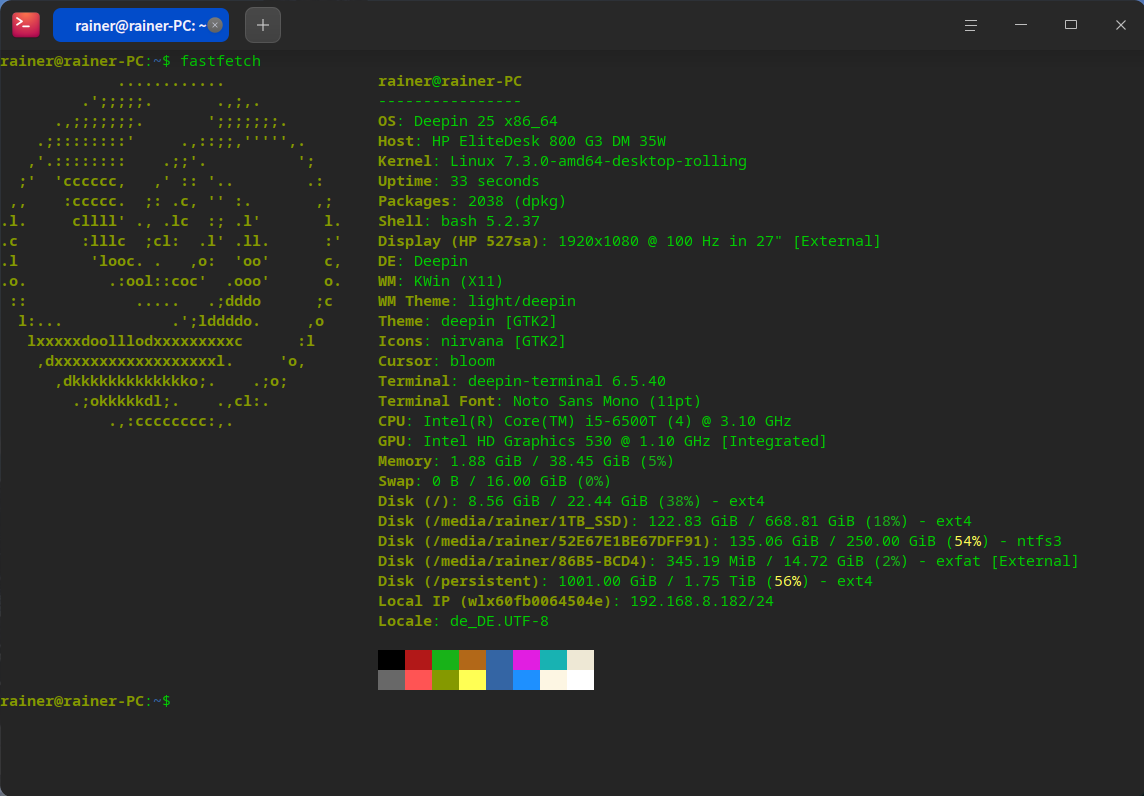
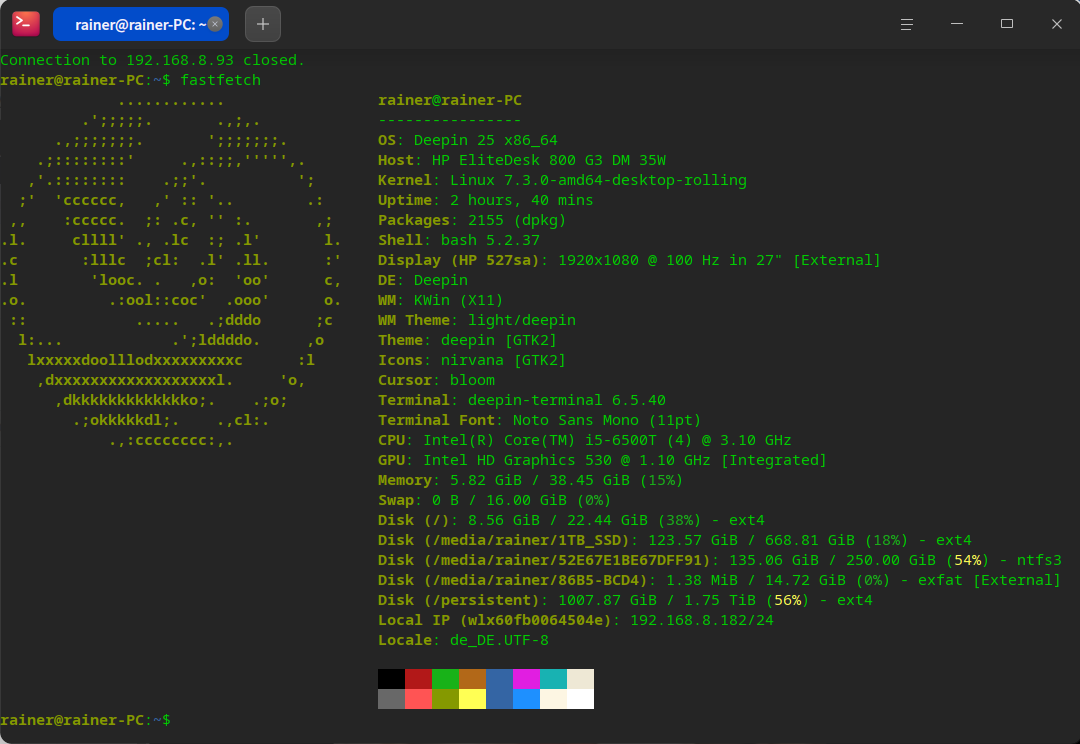
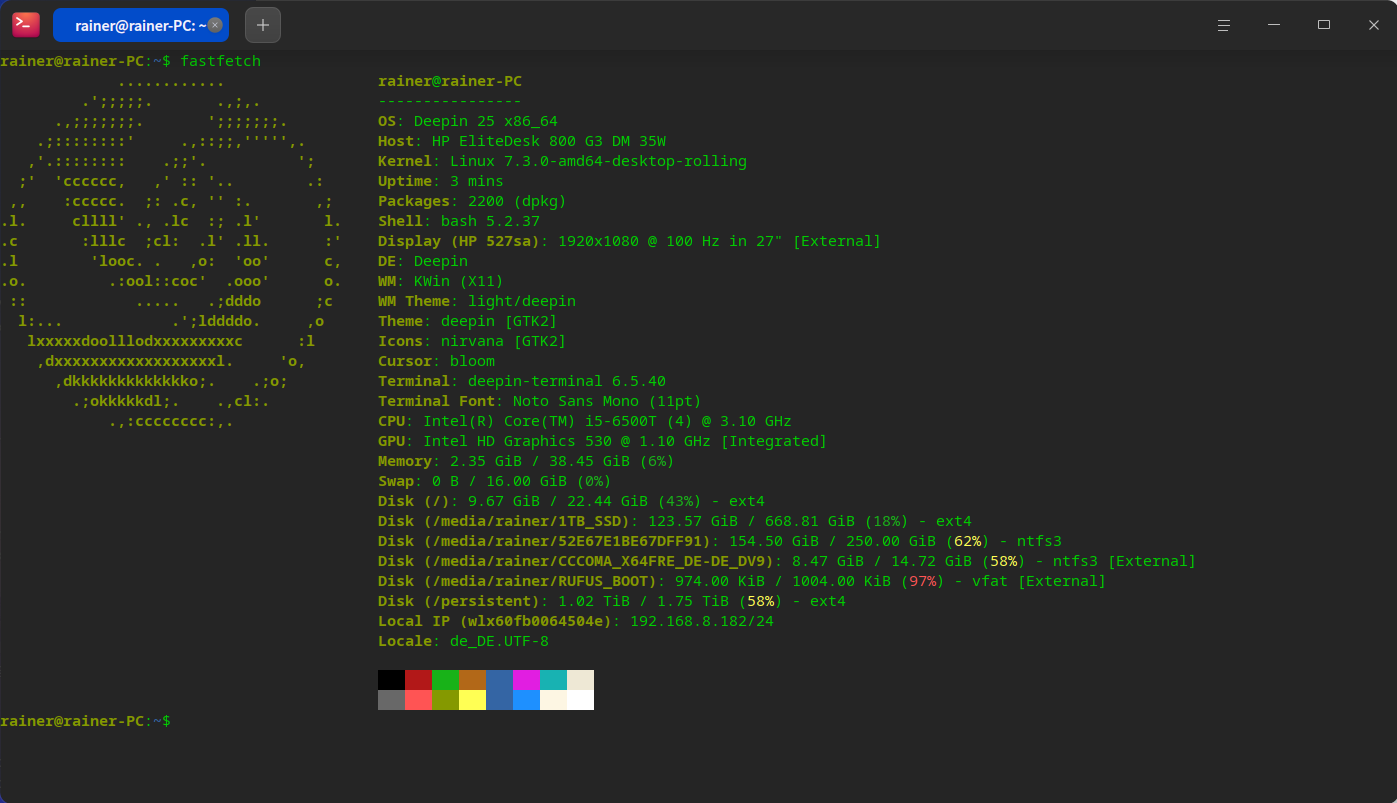
deepin After nearly 2 weeks with Kernel 7.3.0 I have to recommend it. On my system it really works perfect.
Popular Ranking
ChangePopular Events
More


 Taskbar no longer shows popups
The Linux 7.3 kernel was officially released on October 19, and the deepin community has completed adaptation. An early-access build is now available to community users.
This kernel is a community technical preview and will not yet be pushed automatically as an official system update. It carries the latest upstream hardware support and performance optimization results, allowing technology enthusiasts to learn about new kernel features as soon as possible.
Kernel Update: Advances in Both Performance and Hardware Support
The Linux 7.3.0 kernel brings multiple underlying capability upgrades, with optimizations across hardware compatibility, scheduling efficiency, file systems, and kernel configuration:
Multi-Architecture Compatibility, Embracing a Diverse Open-Source Ecosystem
This early-access kernel provides installation packages for three architectures: AMD64, ARM64, and Loong64. They have been synchronized to the deepin community software repository, providing entry points for exploration for technology enthusiasts on different hardware platforms.
Important Compatibility Notes:
Recommended hardware baseline: Intel 6th-generation Core / AMD Zen 2 and newer machines. On older hardware, the new kernel may not necessarily outperform the existing stable version.
For Chinese domestic platforms such as Zhaoxin, Loongson, and Phytium, the official recommendation is to continue using the 6.6 stable kernel to ensure compatibility for daily use. NVIDIA proprietary drivers and some third-party network adapter drivers have not yet been adapted and may cause issues.
Users of the Btrfs file system must back up important data in advance.
Special reminder: This version is a community early-access version, and upstream is still continuously fixing regressions. It is not recommended to deploy it directly in production environments or on primary office devices. The prerequisite for technical exploration is safeguarding data security.
Installation and Rollback: Test Reasonably, Safety First
This kernel will not be automatically pushed as an update. Users who want to try it can manually execute terminal commands to complete installation.
Example commands for the x86_64 (AMD64) architecture:
sudo apt update&&sudo apt install linux-headers-7.3.0-amd64-desktop-rolling linux-image-7.3.0-amd64-desktop-rolling
Run the “uname -m” command to confirm your machine’s hardware architecture, and replace “amd64” in the package name with the corresponding architecture. After installation is complete, reboot the device and select the 7.3 kernel entry in the GRUB boot menu to enter the system. The original stable kernel will be fully retained; do not delete it. If the new kernel has boot issues, you can roll back directly to the old version.
Recommendations before trying:
Community Co-creation, Driving Continuous Evolution of the Open-Source Ecosystem
Open source is a collaborative effort between developers and users.
Users trying the 7.3 kernel are welcome to go to the dedicated 7.3 kernel launch announcement thread on the deepin Forum to share their device operating status. Every piece of feedback is a driving force for underlying OS development iterations.
The deepin community will continue to closely follow upstream technological evolution, balance cutting-edge innovation with practical deployment, and work together with the broad open-source community to co-build a diverse and prosperous open-source ecosystem.